
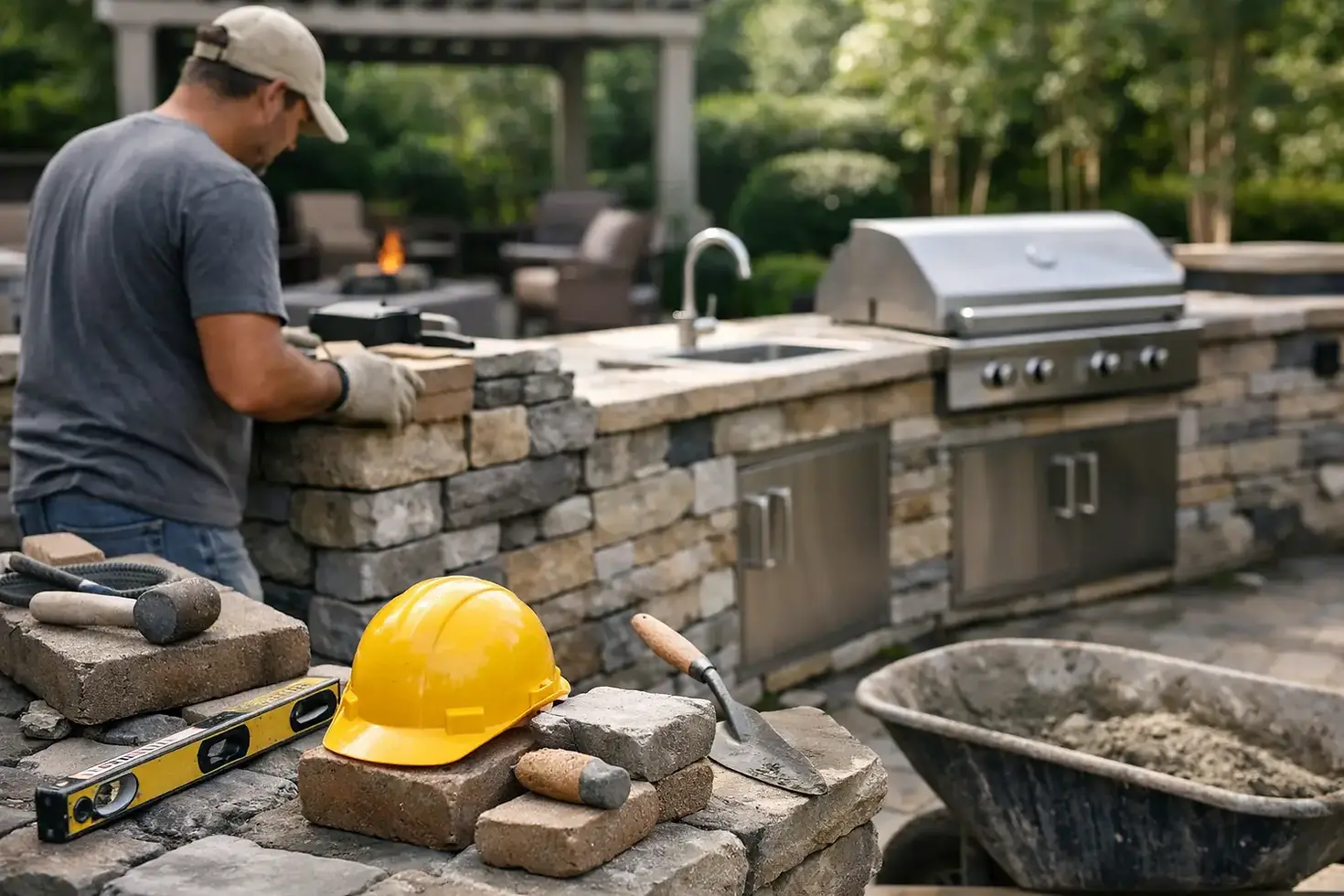
Choosing an Outdoor Kitchen Masonry Contractor

A backyard kitchen can look impressive on a drawing and still become a frustrating space if the masonry work is not planned around heat, drainage, utilities, and how your family actually cooks outside. The right outdoor kitchen masonry contractor helps turn an idea into a durable feature that feels connected to your home, patio, and lifestyle - not a collection of appliances set against a wall.
For homeowners in Glendale, Phoenix, and nearby communities, the Arizona climate adds another layer of planning. Intense sun, monsoon rain, windblown dust, and wide temperature swings can expose weak materials and rushed installation. A professionally built masonry kitchen is designed to hold up through those conditions while adding usable living space and lasting value to the property.
Start With How You Want to Use the Space
The best outdoor kitchens begin with practical questions. Will the area mainly support weekend grilling, or do you want a full entertaining zone with food prep, seating, a refrigerator, and a bar? Do you need shade nearby? Will people move between the indoor kitchen, pool, patio, and grill without creating a traffic bottleneck?
A masonry contractor should look beyond the grill enclosure itself. The patio surface, existing block walls, drainage pattern, utility access, and available clearances all affect the final design. A beautiful stone island placed in the wrong location can make the yard feel crowded or leave the cook facing direct afternoon sun every time the grill is used.
Before construction begins, define the features that matter most. A simple built-in BBQ with counter space may be the right choice for one household. Another may benefit from a larger L-shaped layout that separates hot cooking equipment from beverage service and seating. More features are not automatically better. The goal is a layout that remains comfortable, easy to clean, and realistic for the way you entertain.
What an Outdoor Kitchen Masonry Contractor Should Evaluate
Masonry provides the structure and finish that give an outdoor kitchen its permanence. That means the installation needs more than attractive veneer. A qualified contractor evaluates the foundation or base, framing approach, appliance requirements, material compatibility, and the way water will move around the completed structure.
Base and structural support
Countertops, grills, smokers, pizza ovens, and stone finishes carry significant weight. The supporting base must be level, stable, and appropriate for the soil and existing hardscape. Depending on the project, the contractor may build with concrete block, poured concrete elements, brick, or a combination of masonry materials.
If the kitchen is being added to an existing patio, the condition of that patio matters. Cracks, settling, poor drainage, or an undersized slab may need attention before heavy masonry is installed. Building over a problem usually hides it temporarily rather than fixing it.
Heat protection and appliance clearances
Built-in grills and other cooking equipment have manufacturer-required clearances, ventilation needs, and specifications for combustible materials. Those details should be addressed before the masonry shell is built. Improper spacing can create safety concerns, restrict appliance performance, and make future replacement difficult.
Heat also influences countertop and finish selection. Natural stone, brick, concrete, porcelain tile, and manufactured stone can all work well, but each has different maintenance needs and visual characteristics. A contractor should explain which materials are suitable around high-heat equipment and which finishes are best reserved for lower-temperature areas.
Drainage and water management
Outdoor kitchens need a plan for rainwater. Countertops should shed water rather than trap it, and the surrounding grade should direct runoff away from the home and the masonry base. Water that repeatedly reaches joints, seams, or poorly sealed surfaces can lead to staining, movement, or material failure over time.
In Arizona, monsoon storms can reveal drainage issues quickly. Careful grading and properly planned hardscape transitions help protect the kitchen and keep the patio more usable after rain.
Choose Materials for Performance, Not Just Appearance
Homeowners often start by choosing a color or stone style. Appearance matters, especially when the kitchen needs to complement an existing patio, fireplace, pool deck, or block wall. Still, material decisions should also reflect exposure, maintenance expectations, budget, and the overall construction method.
Brick offers a classic, structured appearance and works well with traditional homes, fireplaces, and existing brick accents. Stone can create a more natural or upscale finish, with options ranging from clean-cut ledgestone to irregular profiles. Concrete block provides a strong concealed structure and can receive stucco, stone veneer, brick veneer, or tile finishes. Pavers may be ideal for extending or reshaping the patio around the kitchen.
Natural stone is not always the best answer simply because it is premium. Some homeowners prefer the clean, consistent look and lower material cost of manufactured stone or stucco. Others want the character variation of real stone and accept that it may need periodic sealing or more careful cleaning. The right choice depends on the desired look and the level of upkeep you are comfortable with.
Countertops deserve the same consideration. Outdoor-rated stone, concrete, tile, and certain porcelain surfaces can provide long-term performance, but they respond differently to heat, stains, UV exposure, and cleaning products. A good contractor helps you weigh those trade-offs before installation, not after a surface has already been selected.
Plan Utilities Before Masonry Goes Up
One of the most expensive mistakes in outdoor kitchen construction is treating gas, electric, water, and drainage as an afterthought. Once masonry, countertops, and finishes are in place, changes can require demolition and repair.
Your project may need a gas line for the grill, electrical service for lighting or refrigeration, water for a sink, and a drain connection where appropriate. These components may involve properly licensed trade professionals and local permitting requirements. The masonry contractor should coordinate the construction sequence so utility rough-ins are completed at the correct stage and access panels, vents, and openings are placed where they are needed.
Think ahead about practical details as well. Where will the propane tank go if the grill is not connected to natural gas? Is there enough counter space beside the grill to safely place trays? Will outlets be protected from weather? Can appliances be serviced or replaced without dismantling part of the island? These decisions are small on paper but make a major difference once the kitchen is in use.
Questions to Ask Before Hiring
A contractor should be comfortable discussing how the outdoor kitchen will be built, not just showing finish samples. Ask whether the existing patio can support the planned structure, how water will be directed away from the kitchen, and what materials will form the structural base.
It is also reasonable to ask how the team handles appliance cutouts, ventilation, utility coordination, and material transitions. If your kitchen will connect to an existing wall, fireplace, or patio, ask how the new work will be tied in so it looks intentional. Clear answers early in the process usually lead to fewer surprises during construction.
A written estimate should identify the project scope, proposed materials, and the work included. Homeowners should understand where allowances apply and which selections can change the final price. Honest pricing does not mean every project costs the same. It means you know what is being built and why before work begins.
A Better Construction Process Protects the Finished Result
Quality masonry work is often most visible years after installation. Straight lines, clean joints, level countertops, properly fitted caps, and well-planned drainage are the details that keep an outdoor kitchen looking finished instead of worn down.
The process should begin with an on-site review of the property and your goals. From there, the layout, material selections, utility needs, and construction scope can be defined before the crew starts building. During installation, careful sequencing matters: base preparation comes before masonry, utility work must occur before finished surfaces, and the final caps, counters, and appliance openings need precise measurement.
Fast scheduling is valuable, but speed should never mean skipping preparation. A contractor who communicates clearly about timing, material availability, and site conditions helps you plan with confidence while protecting the quality of the work.
Build a Backyard Feature You Will Keep Using
An outdoor kitchen should make gathering at home easier. It can create a natural place for family meals, game-day cooking, and relaxed evenings outside while improving the appearance and usefulness of the patio. When the masonry is built correctly, it also becomes a durable extension of the home rather than a temporary backyard add-on.
Masonry BP Group provides free, no-obligation estimates for homeowners planning outdoor kitchens, built-in BBQ areas, patios, fireplaces, and related masonry improvements. A site-specific estimate is the right place to discuss your layout, materials, existing hardscape, and the details needed to build a space that performs well for years.


Comments