
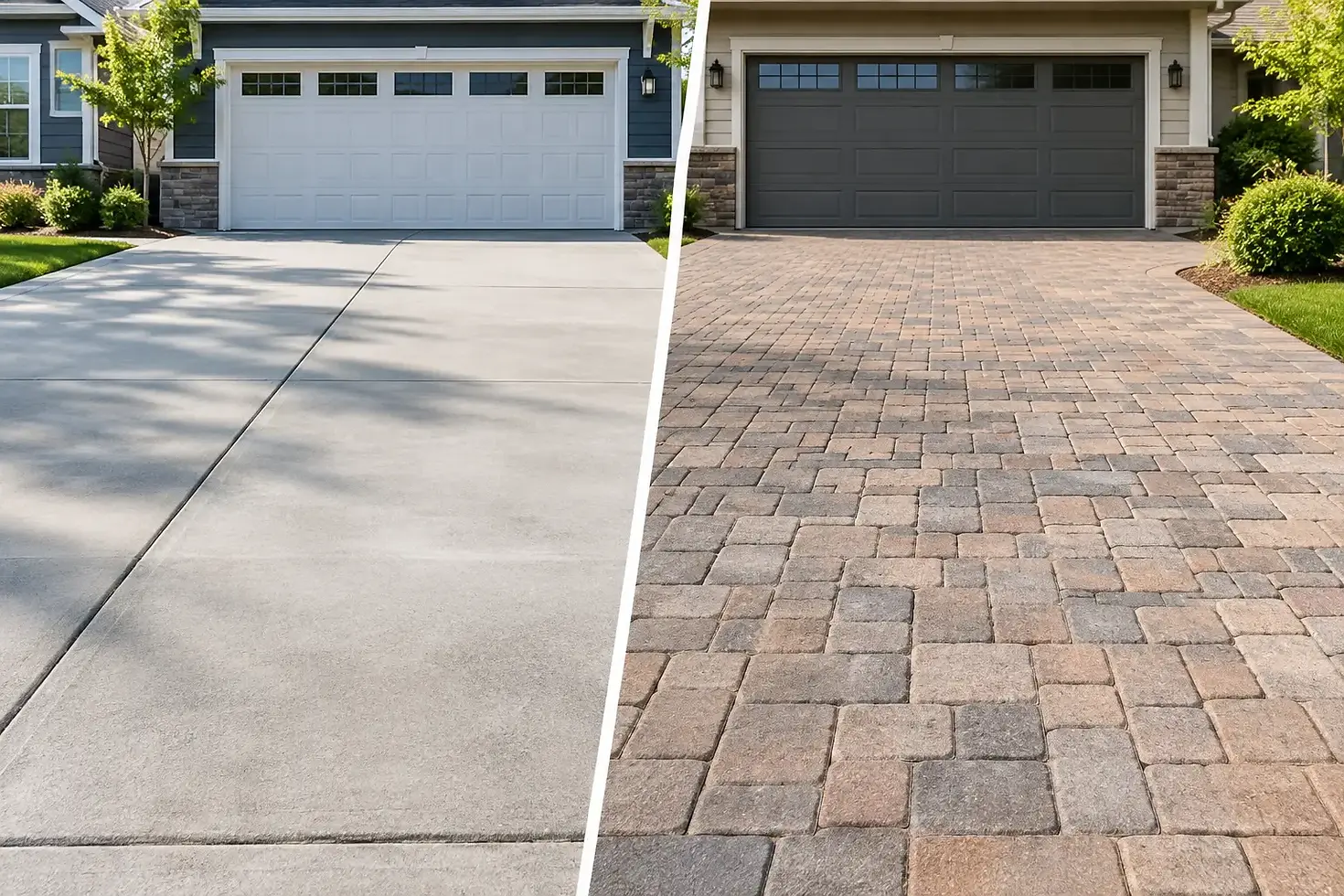
Concrete Versus Paver Driveways Compared

A driveway has to do more than look good from the street. It carries daily vehicle weight, stands up to strong Arizona sun, and should complement the rest of your home's exterior. When homeowners compare concrete versus paver driveways, the better choice usually comes down to priorities: a clean, continuous surface and lower initial cost, or greater design flexibility and easier long-term repairs.
Both materials can create an attractive, dependable driveway when the base preparation, drainage, grading, and installation are handled correctly. The difference is how each surface performs, ages, and can be maintained over time.
Concrete Versus Paver Driveways at a Glance
Concrete creates a solid, poured surface with a simple, uniform appearance. It works well for homeowners who want a straightforward driveway that complements a modern or traditional property without adding a lot of visual pattern. Broom-finished concrete offers traction, while decorative options such as colored or stamped concrete can give the surface more character.
Pavers are individual units, often made of concrete, arranged over a compacted base and bedding layer. They offer more choices in color, shape, texture, and laying pattern. A paver driveway can coordinate with a patio, front walkway, retaining wall, or other masonry features to give the entire property a more finished appearance.
Concrete is often the more economical option at installation. Pavers usually require a larger upfront investment, particularly when the project includes borders, custom patterns, or higher-end materials. That initial price difference should not be the only factor, though. Repair needs, drainage conditions, and the appearance you want five or ten years from now all matter.
Appearance and Curb Appeal
For a clean, understated look, concrete is hard to beat. A properly finished concrete driveway has broad, uninterrupted lines that can make a smaller front yard feel open. It is also a practical match for homes with simple exterior finishes and limited hardscape features.
Pavers provide more visual detail. Homeowners can choose from warm desert tones, grays, charcoals, mixed colors, and patterns that range from traditional to contemporary. Borders can define the driveway edges, while contrasting pavers can connect the driveway to a walkway or entry area. This flexibility is especially valuable when curb appeal is a main goal of the project.
There is a trade-off. A heavily patterned paver design may not suit every home, and too many colors can look busy. Likewise, decorative concrete can add style, but color and stamped finishes may show wear differently than plain concrete. A professional recommendation based on the home, lot, and surrounding masonry helps keep the finished design balanced.
Arizona Heat, Movement, and Cracking
Phoenix-area driveways face intense heat, sun exposure, and major temperature swings between day and night. Concrete expands and contracts as temperatures change. Control joints are placed in the slab to direct where cracking is most likely to occur, but they cannot guarantee that a driveway will never crack.
Small cracks do not always mean a concrete driveway has failed. Hairline cracking can be cosmetic, while wider cracks, uneven slab sections, spalling, or settling may point to drainage, soil movement, or installation concerns. Once a crack is noticeable, however, repairs can remain visible even when completed carefully.
Pavers are made up of individual units with sand-filled joints, so the surface has more ability to accommodate minor movement. Rather than forming one long crack across a slab, a paver system may show a localized low spot, shifted edge, or uneven section. In many cases, the affected pavers can be lifted, the base corrected, and the same pavers reinstalled.
That does not make pavers maintenance-free. Without proper edge restraints and base compaction, pavers can spread, settle, or develop uneven areas. The quality below the surface matters just as much as the pavers you see from the street.
Installation Cost and Long-Term Value
A basic concrete driveway generally costs less to install than a paver driveway of the same size. It uses fewer individual materials and the installation process is typically more direct. For a homeowner replacing a worn driveway on a limited budget, concrete may be the sensible choice.
Paver driveways cost more because they require detailed excavation, a properly compacted aggregate base, bedding material, edge restraints, joint sand, and the placement of each individual unit. Custom cuts, curves, borders, and patterns also add labor. The added cost can be worthwhile when the driveway is a major part of the home's visible exterior or when future repair flexibility is important.
Long-term value depends on the condition of the driveway and the quality of the work. A well-installed concrete surface can provide many years of service. A well-installed paver driveway can retain its appeal over time because damaged or stained units can often be replaced individually instead of removing a large section of pavement.
Repairs: Where Pavers Often Have an Advantage
Repairability is one of the clearest differences between concrete and pavers. When concrete cracks, settles, or chips, the repair may involve crack filling, patching, resurfacing, slab lifting, or replacing part of the driveway. These approaches can improve performance and appearance, but a repaired area may not perfectly match the surrounding concrete.
With pavers, targeted repair is usually more discreet. If a vehicle leaks oil onto a section, a few affected pavers may be replaced. If a utility repair requires access below the driveway, the pavers can often be removed and reset afterward. If a small section settles because of drainage or base movement, that area can be rebuilt without demolishing the entire driveway.
For homeowners planning to stay in their home for many years, this can be a meaningful benefit. It is also useful for properties where underground lines, irrigation adjustments, or future landscape work are likely.
Drainage and Surface Performance
Driveway drainage should be considered before choosing a material. Water should move away from the home, garage, and foundation. Neither concrete nor pavers can compensate for poor site grading.
Concrete is typically sloped as a single surface toward the street or a designated drainage path. Its joints are not designed to drain large amounts of water. When the slope is wrong, water can pool near the garage, run toward the house, or create staining and wear.
Paver systems have joints that can allow some water to move through the surface, depending on the installation and materials used. Permeable paver systems are a separate option designed specifically to manage stormwater, but they require the right base design and site conditions. Standard pavers should still be installed with correct grading and drainage planning.
In either case, standing water is a warning sign. It can contribute to settling, surface deterioration, and damage to nearby masonry or landscaping. Addressing drainage during replacement is far more effective than trying to correct it after the new driveway is complete.
Maintenance Expectations
Concrete needs occasional cleaning and inspection. Sealing may help protect certain decorative finishes and reduce staining, though the appropriate schedule depends on the finish and exposure. Avoid harsh de-icing products and address drainage issues early to limit surface damage.
Pavers benefit from regular sweeping, occasional washing, and monitoring of the joint sand and edge restraints. Over time, joint sand may need to be replenished, particularly in high-traffic areas or after strong water flow. Sealing is optional and can enhance color or help with stain resistance, but it should be selected and applied correctly to avoid an unnatural appearance or slippery finish.
Weeds can grow in paver joints when windblown seeds and organic debris collect on the surface. This is usually a maintenance issue, not a sign that the pavers are failing. Routine cleaning and joint-sand upkeep help keep the driveway looking orderly.
Which Driveway Is Right for Your Home?
Choose concrete if you prefer a simple, continuous surface, want to manage the initial project cost, and do not need extensive color or pattern options. It is a practical, attractive choice when installed on a sound base with proper joints and drainage.
Choose pavers if design flexibility, coordinated hardscaping, and targeted repair options are high priorities. They are often a strong fit for homeowners investing in a more distinctive front exterior or replacing a driveway that has experienced localized settling in the past.
Before making a decision, have the existing driveway and site conditions evaluated. Cracks, low spots, failing edges, and water drainage can reveal whether the real issue is the surface material or what is happening underneath it. Masonry BP Group can provide a clear, no-obligation estimate and help you choose a driveway solution built for your property, budget, and long-term plans.
The best driveway is not simply the one that looks good on installation day. It is the one that fits your home, handles Arizona conditions, and gives you confidence each time you pull into the driveway.


Comments