
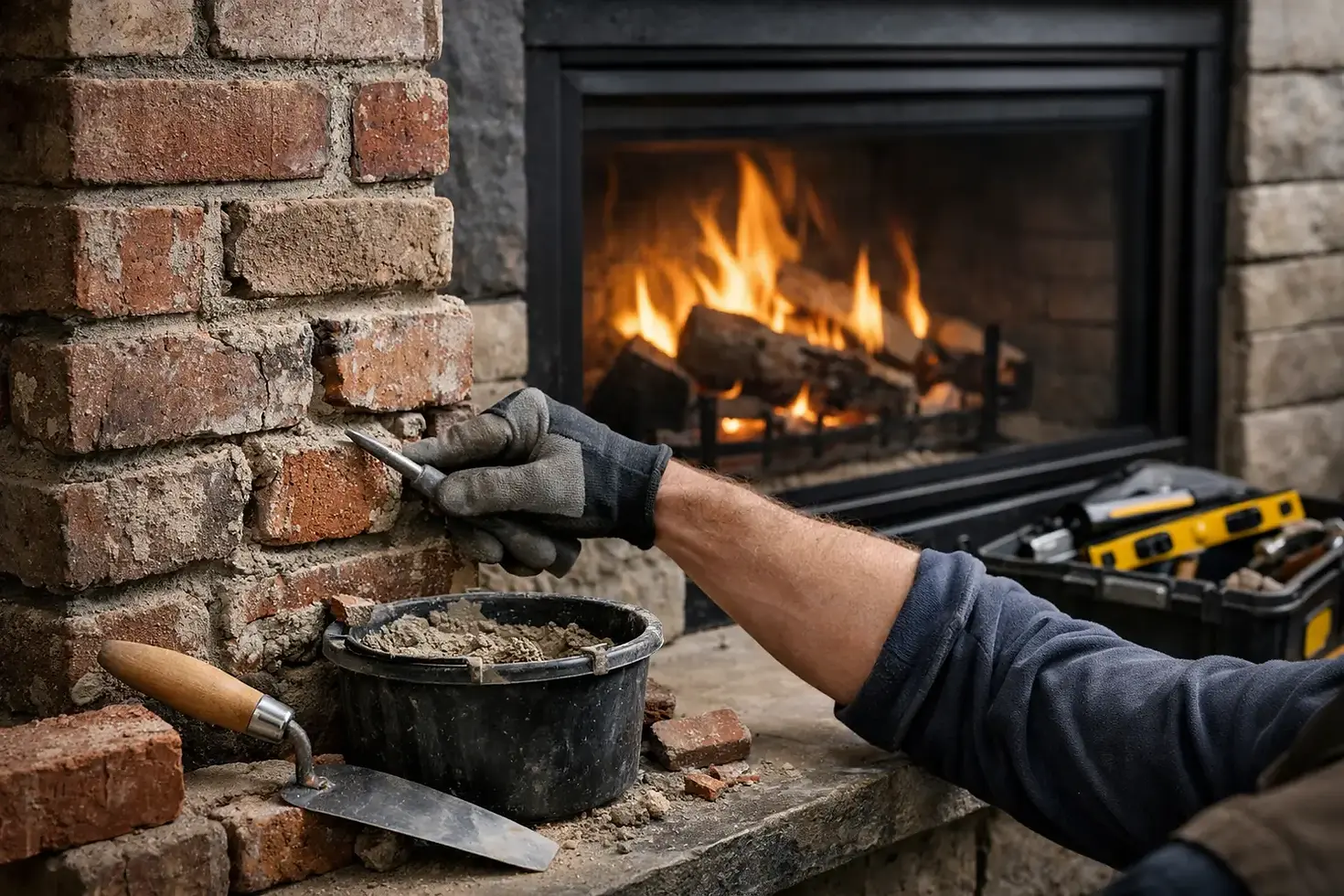
When to Call a Fireplace Brick Repair Service

A fireplace should feel like a solid, dependable part of your home. When bricks crack, mortar starts falling out, or the firebox shows heat damage, it can quickly become more than a cosmetic concern. A professional fireplace brick repair service helps homeowners address visible damage before it affects safe use, indoor air quality, or the long-term condition of the surrounding masonry.
For Phoenix-area homes, fireplaces can sit unused for much of the year, which makes small issues easy to overlook. Then cooler weather arrives, and a fireplace that has not been inspected or maintained may reveal loose brick, crumbling joints, smoke problems, or damage around the hearth. Knowing what to watch for makes it easier to plan a targeted repair instead of waiting for a larger restoration.
What Fireplace Brick Damage Can Mean
Not every crack means a fireplace is failing, but no damage around a firebox should be dismissed without a closer look. Bricks and mortar endure repeated heating and cooling. Over time, that movement can weaken joints, create surface cracks, and cause sections of brick to loosen.
The location and pattern of the damage matter. A hairline crack on an exterior decorative surround may be a limited repair. Missing mortar or fractured firebrick inside the firebox needs more attention because it is exposed directly to high heat. Damage near the chimney opening, hearth, or smoke chamber can also point to movement, moisture intrusion, or deterioration that extends beyond the brick you can see.
A skilled mason evaluates the full area rather than simply filling a crack. The goal is to identify why the masonry failed, select compatible materials, and restore the fireplace so the repair holds up over time.
Signs It Is Time for a Fireplace Brick Repair Service
Loose bricks, open mortar joints, flaking surfaces, and visible cracks are straightforward signs to schedule an inspection. If pieces of mortar are collecting on the hearth or firebox floor, the joints are no longer doing their job. Bricks that shift when touched should not be ignored, even if the fireplace is only used occasionally.
White, powdery staining on brick can be another clue. This is often efflorescence, a mineral deposit left behind as moisture moves through masonry. It does not always mean there is a major structural problem, but it does mean moisture has entered the system. Finding and correcting the moisture source is more useful than repeatedly cleaning the surface.
Watch for changes in performance as well. Smoke entering the room, unusual odors after a fire, or a draft that seems different than it used to be can indicate a problem that deserves professional evaluation. These symptoms may relate to the chimney or flue rather than brick alone, but damaged masonry should be part of the inspection.
Common Fireplace Repairs and Why They Differ
Fireplace masonry is not a one-size-fits-all repair. The right method depends on whether the damage is cosmetic, heat-related, moisture-related, or connected to structural movement.
Replacing cracked or damaged firebrick
Firebrick lines the interior of many fireplaces and is made to handle high temperatures. When a firebrick is deeply cracked, broken, or loose, it may need to be removed and replaced. Ordinary exterior brick is not always an appropriate substitute inside a firebox. Using the proper material and heat-resistant mortar helps protect the fireplace structure during use.
Repointing failed mortar joints
Repointing, often called tuckpointing, removes damaged mortar from a joint and installs new mortar at the proper depth. This is different from spreading a thin layer of new mortar over a crumbling joint. A surface patch may look acceptable briefly, but it often separates when the underlying mortar remains weak.
Matching the mortar matters for appearance and performance. Mortar that is too hard or incompatible with older brick can create new problems over time. A careful repair considers color, texture, joint profile, and the condition of the existing masonry.
Repairing the hearth and fireplace surround
The hearth and decorative surround are exposed to bumps, settling, and everyday wear in addition to heat. A cracked hearth brick, chipped surround, or loose veneer may be repairable without rebuilding the entire fireplace. However, if there is widespread movement or several areas of failure, a broader rebuild can be the more durable and cost-effective choice.
Addressing chimney-related masonry damage
Sometimes the visible fireplace issue starts above the roofline. Deteriorated chimney mortar, cracked chimney brick, failed flashing, or water entry can allow moisture to travel down through the system. Repairing only the interior area without addressing the source may lead to recurring damage. A complete assessment helps define the actual scope of work before repairs begin.
Why DIY Repairs Can Fall Short
Homeowners can handle routine cleaning and visual checks, but fireplace repairs involve materials and conditions that deserve professional judgment. Hardware-store mortar mixes are not automatically suited for every fireplace application, especially inside a firebox. A repair that looks solid after installation may fail early if the mix, joint preparation, or curing process is wrong.
There is also a difference between covering damage and repairing it. Caulk, paint, and quick surface patches can hide cracks temporarily, but they do not correct loose masonry or failed joints. They can also make future evaluation more difficult.
The trade-off is simple: a minor repair may seem like a place to save money, yet an improper fix can turn a defined project into a larger rebuild. Professional masonry work is particularly valuable when the damage is close to heat exposure, involves multiple loose bricks, or may be connected to chimney moisture or structural movement.
What to Expect From a Professional Repair Visit
A dependable fireplace repair process begins with an on-site look at the brick, mortar, hearth, firebox, and accessible surrounding masonry. The mason should explain what is damaged, what likely caused it, and whether the work is limited to a repair or should include related areas such as chimney joints or water management.
The estimate should clearly define the planned scope. Depending on the project, that may include removing failed mortar, replacing damaged brick, preparing the surface, installing compatible materials, and cleaning the work area when finished. Homeowners should also understand whether the fireplace needs curing time before it can be used again.
Clear communication is especially helpful when a repair can be approached in more than one way. For example, replacing a few damaged bricks may be appropriate when the surrounding masonry is stable. If brick and mortar failure is widespread, rebuilding a section may provide better value because it addresses the weak area as a whole.
Protecting Your Fireplace After Repair
Once repairs are complete, a few practical habits can help extend their life. Have the fireplace and chimney inspected as recommended for your fuel type and use. Keep an eye on mortar joints, especially after heavy rain or periods of temperature change. Avoid burning materials that produce excessive heat or corrosive residue, and address water entry quickly rather than waiting for staining or spalling to spread.
If the fireplace has been unused for a long time, inspect it before the first fire of the season. Look for debris, loose material, new cracking, and signs of moisture. A quick check can prevent an unpleasant surprise on the first cool evening you want to use it.
Masonry BP Group provides careful residential brick, mortar, chimney, and fireplace repair for homeowners who want clear answers and durable workmanship. A free, no-obligation estimate gives you a practical starting point: you can understand the condition of your fireplace, review the recommended repair, and make a confident decision before damage has a chance to grow.


Comments